by chris | Aug 14, 2026 | Ghost/Haunting, Weird Stuff
Filed under: Case Files | Cryptid Cynic
Most haunting stories fade quickly into vague, unfalsifiable atmosphere — cold spots, creaking floors, a feeling someone gets in an old house. The Bell Witch case is different in a way that’s genuinely rare in this genre: a documented, escalating timeline, named witnesses across an entire rural community, a specific alleged death attributed directly to the entity, and — the detail that gets this case invited to more serious conversations than almost any other haunting in American folklore — a claimed encounter involving a sitting future President of the United States. I’ll be honest: this is the kind of case that makes me want to believe in ghosts a little, and I’m not going to pretend otherwise while we go through it.
The Setting: Robertson County, Tennessee, 1817
John Bell Sr. was a prosperous farmer living with his family near Adams, Tennessee, in what was then a genuinely remote frontier community. According to the traditional account — compiled most extensively in M.V. Ingram’s 1894 book An Authenticated History of the Bell Witch, still the primary written source for most of the detailed narrative — the haunting began with relatively minor disturbances: strange knocking, scratching at the walls, the family dog reacting with real distress to something unseen.
Over the following months, things escalated. John Bell’s daughter Betsy reported physical assault — slapping, pinching, hair-pulling by an unseen force. The entity eventually developed the ability to speak clearly and adopted several names over time, most famously “Kate,” widely believed by the community to be connected to a neighbor, Kate Batts, with whom John Bell had an ongoing property dispute. That detail deserves a moment of real sympathy for a real person: a living neighbor got publicly blamed by an entire community for supernaturally tormenting a family, seemingly rooted in a land argument. Whatever was actually haunting that house, it’s a genuinely uncomfortable footnote for anyone who takes the human cost of folklore seriously.
The Death of John Bell
This is the detail that separates the Bell Witch from virtually every other haunting story in American folklore. John Bell died on December 20, 1820, after a period of declining health the traditional narrative attributes directly to ongoing torment by the entity. According to the most-repeated version of events, a small vial of unknown liquid was found near his body after death, and when tested on the family cat, the animal reportedly died immediately. The entity’s voice allegedly took credit for the poisoning outright, in front of witnesses.
I want to be upfront about the gap here rather than pretend it isn’t there: Ingram’s 1894 book was written seven decades after Bell’s actual death, compiled from oral tradition and community memory that had plenty of time to be shaped and reinforced by constant retelling. That’s a long gap, and it should lower our confidence in the most specific dramatic beats — the vial, the cat, the spoken confession — compared to how confidently they usually get repeated. And yet. A specific, named death, attributed directly and publicly to a haunting by an entire community while it was still fresh, is a genuinely rare and weighty claim in this genre. Most hauntings describe fear and discomfort. Very few claim a direct causal link to an actual death, and that alone earns this case more of my attention than most.
The Andrew Jackson Connection
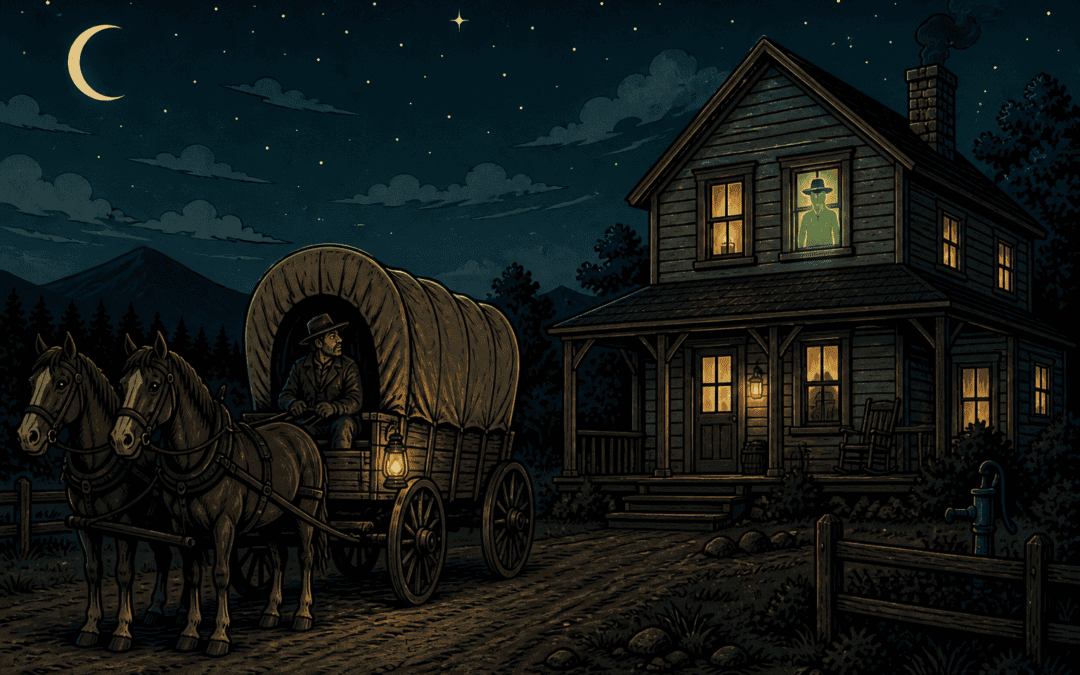
This is the detail that gets this case cited more than almost any comparable haunting, and I wish I could confirm it, because it’s a genuinely great story. According to tradition, Andrew Jackson — general and future President — traveled to the Bell farm specifically to investigate, and his wagon mysteriously became stuck and immovable approaching the property until the entity’s voice announced it would let the wagon proceed. One of Jackson’s companions, a self-proclaimed “witch tamer,” was then reportedly tormented and humiliated until he fled the property.
Here’s the honest, deflating context: there’s no contemporary, corroborating documentation from Jackson’s own extensive personal papers or any independent historical record placing him at the Bell farm at all — and Jackson is one of the most thoroughly documented political figures of his era, combed through by historians for entirely unrelated reasons. The most likely explanation is that this detail got attached later, because pairing a folk legend with a famous, credible name is one of the oldest tricks for giving a local story extra staying power (the same instinct that got Andrew Jackson’s name here probably isn’t so different from how Mother Leeds’ curse got attached to a struggling colonial almanac publisher in our Jersey Devil piece). It doesn’t make the rest of the case less interesting. It just means I can’t hand you Andrew Jackson as your proof, however much I’d like to.
Why This Case Gets Taken More Seriously Than Most Anyway
A few real, honest reasons this one has staying power beyond just a good story. Unlike most haunting claims — a single family’s private experience, one dramatic night — the Bell Witch involved an entire rural community over multiple years, with claimed witnesses well beyond the immediate family, including neighbors and a local schoolteacher. A sustained, multi-year, community-wide phenomenon is a genuinely different animal than an isolated incident, even allowing for communal reinforcement and shared expectation compounding over time in a tight-knit frontier town.
It also predates the later 19th-century Spiritualism movement (which took off more prominently in the 1840s-50s) by several decades, meaning it can’t be easily written off as riding a broader contemporary “talking spirit” trend — if anything, it may have helped set the stage for it. And most importantly: a specific, named death, attributed directly by an entire community at the time, is a genuinely rare and serious claim compared to the vague atmospheric hauntings that fill most of this genre.
The Skeptical Case (Given Its Fair Weight, No More Than That)
The most credible mundane theory centers on Betsy Bell herself as a likely source of much of the physical phenomena — echoing a well-documented pattern across cultures where a young person under real household stress becomes the unconscious epicenter of reported disturbances, a genuinely studied phenomenon in psychological literature. Some historians have also proposed that John Bell’s real, documented symptoms — facial swelling, difficulty eating, a stiffened jaw — are consistent with a mundane chronic illness, or arsenic exposure from period medicine or pest control, entirely unrelated to any deliberate act. A family under the visible strain of a father’s frightening decline, already living inside a community-wide supernatural narrative, gives a lot of room for real symptoms to be folded into the bigger legend, especially seventy years later when it finally got written down.
What We Actually Think
We think the honest, fun answer here is that we don’t actually know, and we’re genuinely glad we don’t. The skeptic in us finds Betsy-as-source and mundane illness a completely reasonable, well-supported explanation for most of what happened in that house. But the part of us that wants some of this to be real can’t quite let go of the fact that an entire community, across multiple years, independently and consistently attributed a man’s actual death to something none of them could otherwise explain — no viral internet post, no cash reward, no book deal waiting at the end of it, just a lot of frightened, sincere 19th-century Tennessee farmers who all told the same story. Maybe it really was grief, illness, and a scared teenage girl carrying more than anyone should have to. Or maybe Kate Batts had every right to be furious, and we’re still telling her story wrong two hundred years later. Either way — we’d genuinely love to know, and we’re not going to pretend we’re not rooting a little for the version where something was actually there.
Got a haunting, sighting, or theory of your own worth digging into? Send it our way — we’re always building out the next case file.
by chris | Aug 14, 2026 | UFO/UAP, Weird Stuff
Filed under: Case Files | Cryptid Cynic
Most of the properties on this site’s radar earn their reputation from a single dramatic night — a sighting, a crash, a disappearance. Skinwalker Ranch earns its reputation from decades of accumulated claims, a genuinely bizarre ownership history involving a real aerospace billionaire, at least one actual government-adjacent research program, and — this is the part that separates it from almost every other “haunted property” story — a modern cable television empire built entirely around continuing to investigate it. I want to be honest about something up front: this is one of the few cases on this site where, the deeper I dug, the more I found myself genuinely wanting there to be something real going on out there. Let’s get into why.
Where This Actually Starts
The property in question sits in Utah’s Uinta Basin, a roughly 512-acre ranch near the town of Ballard, on land with a documented history of Ute and Navajo cultural significance that predates any of the modern paranormal claims by centuries. The “Skinwalker” name itself comes directly from Navajo tradition — a “skinwalker” (yee naaldlooshii) is a specific and serious figure in Navajo belief, a malevolent witch capable of transforming into animal forms. Worth flagging clearly: this is a real cultural and spiritual concept belonging to a specific living tradition, not a generic horror-movie label, and the ranch’s branding around it has drawn legitimate criticism from Navajo commentators for commercializing sacred belief for tourism and TV ratings. That’s worth sitting with regardless of what you make of everything else here.
Long before any television crews showed up, the property (then ranched by the Sherman family through most of the 20th century) already had a local reputation for unusual livestock deaths, strange lights, and general unease among neighbors — the kind of quiet, decades-old word-of-mouth reputation that, frankly, tends to mean something is going on, even if that something turns out to be more explainable than exciting.
The Story That Actually Made It Famous
The modern legend traces to Terry and Gwen Sherman, who purchased the ranch in 1994 and, according to their own account, experienced an escalating series of anomalies almost immediately — cattle mutilations, unexplained lights, physical structures appearing and disappearing, and encounters with large, unidentified animals that seemed impervious to gunfire. Their claims eventually reached journalist George Knapp, a respected Las Vegas reporter with a long-standing interest in UFO phenomena, who wrote about the property extensively and brought it to a national audience.
Here’s the part I keep coming back to: Knapp isn’t a random tabloid stringer. He’s a Peabody and Emmy-award-winning investigative journalist with a decades-long mainstream news career, which means this story didn’t originate from an anonymous internet post — it came through an actual, accountable journalistic process. That’s a genuinely higher bar than most viral paranormal stories clear at the origin point, and it’s the reason I can’t fully write this one off as campfire noise, even with everything that comes next.
Then a Billionaire Bought It
This is where the case stops being a regional curiosity and becomes something I think is legitimately hard to dismiss out of hand. In 1996, the property was purchased by Robert Bigelow — a real estate developer and hotel-chain founder who had already built a serious personal interest in UFO and paranormal research, funding it through his own non-profit, the National Institute for Discovery Science (NIDS).
Bigelow went on to found Bigelow Aerospace, a legitimate space technology company with real NASA contracts. So the same person bankrolling paranormal ranch research also ran a credible aerospace engineering firm working with the actual U.S. space program, and reportedly had informal ties to the early Pentagon UAP investigative efforts we covered in our Pentagon piece. That’s a genuinely rare credibility profile in this genre, and it’s exactly the kind of detail that makes me want to give this case the benefit of the doubt a little longer than I normally would.
NIDS ran a private research program at the property for roughly a decade — surveillance equipment, soil and animal studies, witness interviews, real money, real years. And here’s the frustrating part, the one that keeps this from being a slam-dunk: despite all that, NIDS never published a peer-reviewed paper or a comprehensive public report. What came out was mostly secondhand — journalist accounts, later staff interviews, and the book Hunt for the Skinwalker (co-written by NIDS scientist Colm Kelleher and George Knapp himself), which compiles the claims but isn’t independently verifiable research in the strict sense. I’d love for that gap not to exist. It does.
The Modern Era: A TV Show and a New Owner
In 2016, the ranch sold again to Adamantium Real Estate, controlled by Utah businessman Brandon Fugal, who partnered with the History Channel on The Secret of Skinwalker Ranch — now running multiple seasons and by far the property’s biggest audience yet.
I’ll say the honest, slightly deflating thing here: reality TV has a built-in incentive problem that’s almost impossible to fully separate from genuine research. A show needs weekly developments to earn its next season. Real investigation often produces long stretches of nothing followed by slow, unglamorous analysis that doesn’t make good television. Multiple seasons in, we’ve gotten sensor readings, anomalous audio, and claimed equipment effects — but nothing that’s gone to outside scientific institutions for open, independent verification. I want the show to be capturing something real. I just can’t fully confirm that it is, and neither, really, can anyone watching from home.
What’s Actually Been Documented, Stripped of Hype
Cattle mutilations. Real, well-documented phenomenon across the American West since the 1970s, not unique to this property (it deserves its own full case file eventually). Veterinary investigations broadly attribute the “precise” cuts to predator and scavenger activity plus bloating during decomposition, which can mimic surgical precision to an untrained eye. A solid mundane explanation for a lot of cases — though it’s fair to note it doesn’t perfectly account for every individual claim tied to this specific ranch.
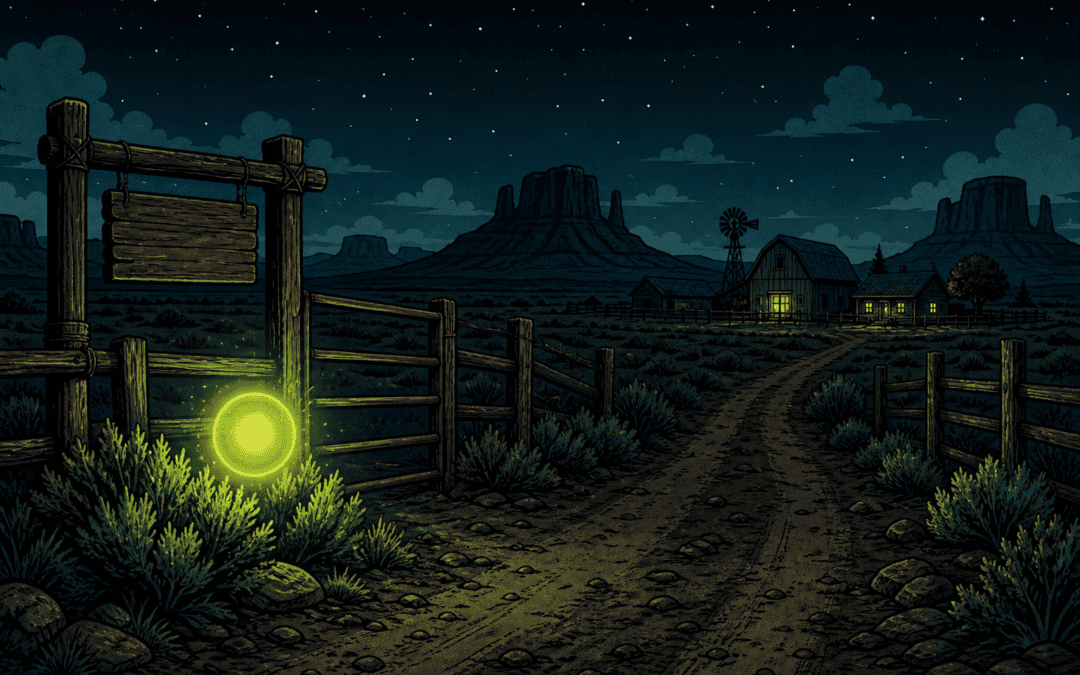
Anomalous lights and orbs. Genuinely dark skies out there, plus proximity to Hill Air Force Base and other Utah testing areas — misidentified aircraft and undisclosed military activity are real, boring, plausible explanations that don’t get enough airtime in the flashier coverage.
Physical and electronic anomalies. The hardest category to judge fairly, precisely because so little has ever been released for outside examination. Equipment failure in remote field conditions is extremely common for mundane reasons. Without independent data available for review, there’s no way to rule that out — but there’s also no way to rule it in as the full explanation, and that gap is where I think the genuinely interesting version of this story still lives.
Why I Can’t Fully Let This One Go
Here’s my honest, hopeful case for taking this seriously anyway: the sheer duration and consistency of claims across three completely separate, financially unrelated owners — the Shermans, then Bigelow’s team, then Fugal’s production — is a genuinely unusual pattern. Most exaggerated local legends don’t survive three separate ownership changes, each with different financial incentives at different points. The Shermans had no book deal when their claims started. NIDS operated privately for years without seeking any publicity at all. That’s not proof of anything supernatural. But it’s a real, structural reason to keep an open mind rather than filing this under “rural ghost story cashing in on a TV deal” and moving on.
What We Actually Think
We think Skinwalker Ranch is one of the most genuinely fun cases in the whole genre to sit with, precisely because it refuses to resolve cleanly in either direction. The skeptic in us wants independently verified data before believing anything dramatic happened out there — and after thirty years and multiple credentialed investigators, that data still doesn’t exist. But the part of us that started this whole site hoping some of this stuff is real can’t ignore that a real aerospace executive with real Pentagon-adjacent connections kept funding research on this specific property for a decade, quietly, with no cameras rolling. Maybe it’s misidentified predators, classified aircraft, and equipment glitches all the way down. Or maybe Robert Bigelow knew something the rest of us don’t, and just never got around to publishing the paper. Until someone does, we’re staying tuned — happily, skeptically, and with our fingers crossed.
Next up: we head to 1817 Tennessee, for the one haunting case with witness testimony from a sitting U.S. president attached to it.
The Bell Witch: America’s Most Documented Haunting, and the One That Allegedly Killed Someone
Filed under: Case Files | Cryptid Cynic
Most haunting stories fade quickly into vague, unfalsifiable atmosphere — cold spots, creaking floors, a feeling someone gets in an old house. The Bell Witch case is different in a way that’s genuinely rare in this genre: a documented, escalating timeline, named witnesses across an entire rural community, a specific alleged death attributed directly to the entity, and — the detail that gets this case invited to more serious conversations than almost any other haunting in American folklore — a claimed encounter involving a sitting future President of the United States. I’ll be honest: this is the kind of case that makes me want to believe in ghosts a little, and I’m not going to pretend otherwise while we go through it.
The Setting: Robertson County, Tennessee, 1817
John Bell Sr. was a prosperous farmer living with his family near Adams, Tennessee, in what was then a genuinely remote frontier community. According to the traditional account — compiled most extensively in M.V. Ingram’s 1894 book An Authenticated History of the Bell Witch, still the primary written source for most of the detailed narrative — the haunting began with relatively minor disturbances: strange knocking, scratching at the walls, the family dog reacting with real distress to something unseen.
Over the following months, things escalated. John Bell’s daughter Betsy reported physical assault — slapping, pinching, hair-pulling by an unseen force. The entity eventually developed the ability to speak clearly and adopted several names over time, most famously “Kate,” widely believed by the community to be connected to a neighbor, Kate Batts, with whom John Bell had an ongoing property dispute. That detail deserves a moment of real sympathy for a real person: a living neighbor got publicly blamed by an entire community for supernaturally tormenting a family, seemingly rooted in a land argument. Whatever was actually haunting that house, it’s a genuinely uncomfortable footnote for anyone who takes the human cost of folklore seriously.
The Death of John Bell
This is the detail that separates the Bell Witch from virtually every other haunting story in American folklore. John Bell died on December 20, 1820, after a period of declining health the traditional narrative attributes directly to ongoing torment by the entity. According to the most-repeated version of events, a small vial of unknown liquid was found near his body after death, and when tested on the family cat, the animal reportedly died immediately. The entity’s voice allegedly took credit for the poisoning outright, in front of witnesses.
I want to be upfront about the gap here rather than pretend it isn’t there: Ingram’s 1894 book was written seven decades after Bell’s actual death, compiled from oral tradition and community memory that had plenty of time to be shaped and reinforced by constant retelling. That’s a long gap, and it should lower our confidence in the most specific dramatic beats — the vial, the cat, the spoken confession — compared to how confidently they usually get repeated. And yet. A specific, named death, attributed directly and publicly to a haunting by an entire community while it was still fresh, is a genuinely rare and weighty claim in this genre. Most hauntings describe fear and discomfort. Very few claim a direct causal link to an actual death, and that alone earns this case more of my attention than most.
The Andrew Jackson Connection
This is the detail that gets this case cited more than almost any comparable haunting, and I wish I could confirm it, because it’s a genuinely great story. According to tradition, Andrew Jackson — general and future President — traveled to the Bell farm specifically to investigate, and his wagon mysteriously became stuck and immovable approaching the property until the entity’s voice announced it would let the wagon proceed. One of Jackson’s companions, a self-proclaimed “witch tamer,” was then reportedly tormented and humiliated until he fled the property.
Here’s the honest, deflating context: there’s no contemporary, corroborating documentation from Jackson’s own extensive personal papers or any independent historical record placing him at the Bell farm at all — and Jackson is one of the most thoroughly documented political figures of his era, combed through by historians for entirely unrelated reasons. The most likely explanation is that this detail got attached later, because pairing a folk legend with a famous, credible name is one of the oldest tricks for giving a local story extra staying power (the same instinct that got Andrew Jackson’s name here probably isn’t so different from how Mother Leeds’ curse got attached to a struggling colonial almanac publisher in our Jersey Devil piece). It doesn’t make the rest of the case less interesting. It just means I can’t hand you Andrew Jackson as your proof, however much I’d like to.
Why This Case Gets Taken More Seriously Than Most Anyway
A few real, honest reasons this one has staying power beyond just a good story. Unlike most haunting claims — a single family’s private experience, one dramatic night — the Bell Witch involved an entire rural community over multiple years, with claimed witnesses well beyond the immediate family, including neighbors and a local schoolteacher. A sustained, multi-year, community-wide phenomenon is a genuinely different animal than an isolated incident, even allowing for communal reinforcement and shared expectation compounding over time in a tight-knit frontier town.
It also predates the later 19th-century Spiritualism movement (which took off more prominently in the 1840s-50s) by several decades, meaning it can’t be easily written off as riding a broader contemporary “talking spirit” trend — if anything, it may have helped set the stage for it. And most importantly: a specific, named death, attributed directly by an entire community at the time, is a genuinely rare and serious claim compared to the vague atmospheric hauntings that fill most of this genre.
The Skeptical Case (Given Its Fair Weight, No More Than That)
The most credible mundane theory centers on Betsy Bell herself as a likely source of much of the physical phenomena — echoing a well-documented pattern across cultures where a young person under real household stress becomes the unconscious epicenter of reported disturbances, a genuinely studied phenomenon in psychological literature. Some historians have also proposed that John Bell’s real, documented symptoms — facial swelling, difficulty eating, a stiffened jaw — are consistent with a mundane chronic illness, or arsenic exposure from period medicine or pest control, entirely unrelated to any deliberate act. A family under the visible strain of a father’s frightening decline, already living inside a community-wide supernatural narrative, gives a lot of room for real symptoms to be folded into the bigger legend, especially seventy years later when it finally got written down.
What We Actually Think
We think the honest, fun answer here is that we don’t actually know, and we’re genuinely glad we don’t. The skeptic in us finds Betsy-as-source and mundane illness a completely reasonable, well-supported explanation for most of what happened in that house. But the part of us that wants some of this to be real can’t quite let go of the fact that an entire community, across multiple years, independently and consistently attributed a man’s actual death to something none of them could otherwise explain — no viral internet post, no cash reward, no book deal waiting at the end of it, just a lot of frightened, sincere 19th-century Tennessee farmers who all told the same story. Maybe it really was grief, illness, and a scared teenage girl carrying more than anyone should have to. Or maybe Kate Batts had every right to be furious, and we’re still telling her story wrong two hundred years later. Either way — we’d genuinely love to know, and we’re not going to pretend we’re not rooting a little for the version where something was actually there.
Got a haunting, sighting, or theory of your own worth digging into? Send it our way — we’re always building out the next case file.
by chris | Aug 8, 2026 | Cover Up, Weird Stuff
Filed under: Case Files | Cryptid Cynic
Most of the stories on this site involve something that might not be real — a cryptid, a saucer, a moth-shaped omen. Dyatlov Pass is different, and it’s worth sitting with that difference for a second before we go further: nine real people, experienced hikers, died in the Ural Mountains in February 1959, under circumstances that remain, over six decades and multiple official and unofficial investigations later, genuinely unresolved. This isn’t a campfire story. It’s an open case with a body count, and it deserves to be treated with more weight than “spooky mystery content” usually gets.
With that said — let’s dig in, because the actual facts of this case are stranger than almost any fictional horror story could invent, and understanding why is more interesting than any single theory about what caused it.
Who Were They, and What Were They Doing?
In late January 1959, a group of nine experienced Ural Polytechnic Institute students and graduates, led by 23-year-old Igor Dyatlov, set out on a ski trekking expedition through the northern Ural Mountains, aiming for Gora Otorten — a peak whose name, in the local Mansi language, has been informally translated by some as meaning “don’t go there,” a detail every article about this case mentions and that we’re including too, because it’s genuinely eerie even if the translation itself is disputed among linguists.
These were not novices. This was a Category III trek, the most difficult grade in the Soviet hiking classification system at the time, and the group had the certifications and experience to attempt it. One member turned back early due to illness — the only member of the original group of ten who survived, purely because of bad timing that happened to save his life.
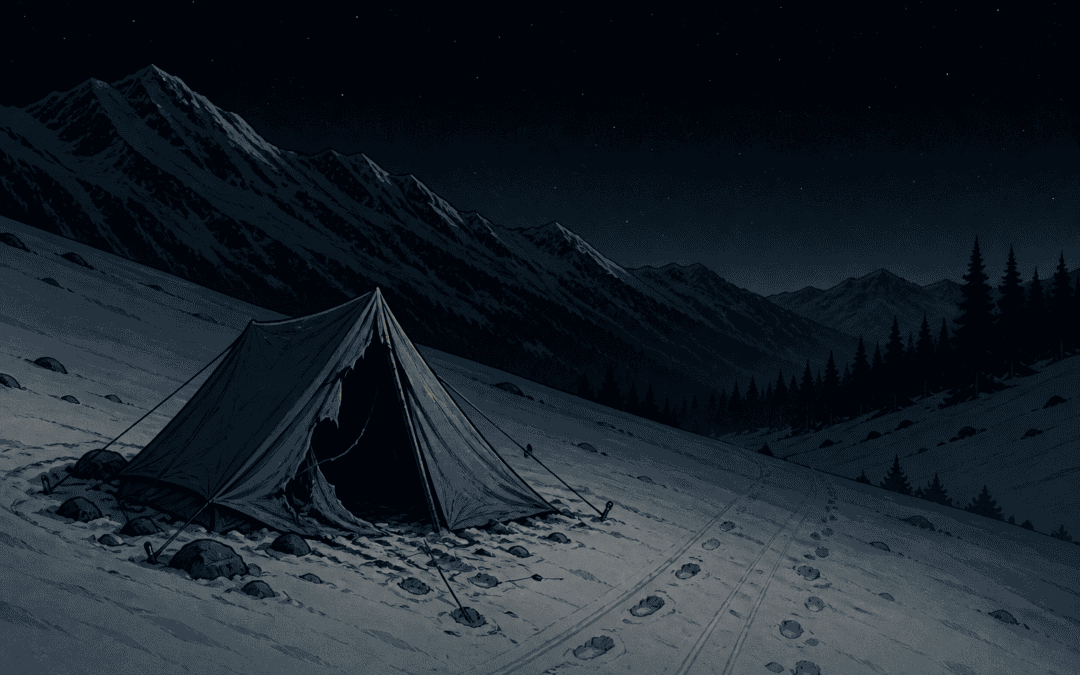
On February 1, the group set up camp on the slope of a mountain the Mansi people called Kholat Syakhl — which translates, again per multiple sources, to “Dead Mountain,” a name that predates this incident entirely and was not invented after the fact, for what that’s worth. When they failed to check in as scheduled, a search was launched, and on February 26, searchers found the group’s tent, cut open from the inside, abandoned, with most of the hikers’ belongings, boots, and warm clothing still left behind.
What Searchers Actually Found
This is where the case stops being merely tragic and starts being genuinely baffling, so let’s go through it carefully, because the details matter more than any single dramatic summary.
Footprints, made by people wearing only socks, a single shoe, or bare feet, led away from the tent down the slope — in February, in the Urals, in conditions well below freezing. Whatever happened, it happened fast enough and felt urgent enough that a group of experienced winter hikers left their tent, in the snow, at night, without properly dressing first. That detail alone is the seed of every theory that follows: something made them prioritize immediate flight over the basic survival instinct to grab boots and coats.
The first two bodies were found near a large cedar tree at the forest’s edge, about a mile from the tent, in only their underwear. The tree had broken branches up to five meters high, suggesting one or both had climbed it — searching for something, or fleeing something, at height. Three more bodies were found between the tree and the camp, apparently having died attempting to return to the tent. The remaining four bodies weren’t found until May, buried under meters of snow in a ravine further into the forest, and it’s this final group where the case takes its darkest turn: some had major physical trauma. One had major skull damage. Two had severe chest fractures consistent, according to Soviet investigators at the time, with the kind of force involved in a car crash — without any corresponding external wounds, bruising, or broken skin. In other words: internal trauma severe enough to be compared to a vehicle collision, with no visible cause. One member was missing her tongue, eyes, and part of her lips, though this detail is now widely attributed to natural decomposition and predation given the extended time her body spent partially submerged in a stream before recovery, not to any external attack.
The Soviet investigation at the time officially closed the case citing “a compelling natural force” as the cause of death, without further specifying what that force was — an almost comically unsatisfying conclusion for a state investigation to formally submit, and one that’s fueled speculation ever since. Some reports also noted elevated radiation levels on a few of the hikers’ clothing, though the significance and even the reliability of this detail has been disputed in later reviews.
The Theories, Ranked by How Seriously We Take Them
Avalanche (most credible mundane theory). A 2019 investigation by Russian prosecutors, followed by a widely-cited 2021 study published in Communications Earth & Environment, proposed a specific, unusual type of slab avalanche that could explain the tent damage and the group’s panicked flight, using modern snow-slope modeling and local topographical data. The theory has a real answer to the “why didn’t they see it coming” problem too: this wasn’t a Hollywood avalanche roaring down a mountainside — it would have been a smaller, delayed slab release, hours after they’d cut into the slope to pitch the tent, which is consistent with why experienced hikers wouldn’t have anticipated it. This theory also offers a genuinely plausible mechanism for the severe unexplained internal injuries: a compacted snow slab can deliver blunt force trauma without leaving external wounds, in a manner that could plausibly be compared to a car accident. This is, as of the most recent serious scientific literature, the leading credible explanation.
Katabatic wind / infrasound panic. An alternative theory proposes a specific local wind pattern around the mountain’s shape could have generated infrasound — sound below the range of human hearing that’s documented in some research to cause feelings of dread, disorientation, and panic in people exposed to it — potentially explaining why a group of experienced hikers fled their tent in a genuine, immediate, almost irrational hurry. It’s a real, physically grounded phenomenon, though critics note the theory struggles to fully account for the specific severe injuries found on some bodies.
Military testing / cover-up. Given the era, the location’s proximity to sensitive Soviet military test areas, and the lingering radiation detail, some researchers have proposed the group either witnessed something the military didn’t want witnessed, or was affected by a weapons test gone wrong, with the official investigation closed vaguely specifically to avoid admitting it. This theory is unfalsifiable in the specific way most cover-up theories are — the lack of hard evidence is used as proof of the cover-up’s effectiveness, which is a logically shaky foundation no matter how emotionally compelling it feels given how genuinely strange the state’s own non-answer was.
Yeti / cryptid attack. Yes, this theory exists, and yes, we have to mention it because it’s this site’s whole reason for existing, but we’d be lying to you if we pretended it holds up against the avalanche/blunt-trauma evidence as well as the mundane explanations do. We’re including it for completeness, not conviction.
What We Actually Think
We think the 2021 avalanche-slab study is the strongest candidate on the table, and it’s the rare “boring” explanation that actually accounts for the specific, weird physical evidence — the tent cut from inside, the panicked underdressed flight, and the severe unexplained internal trauma — rather than requiring you to hand-wave any of it away. But we also think it’s worth being honest that “strongest candidate” isn’t the same as “case closed,” particularly for anyone who’s lost family wanting a fuller answer than a modeled snow-slab scenario sixty-five years after the fact.
This is the one entry on this site where we’re less interested in being funny about the mystery and more interested in just making sure the actual story — nine real people, a genuinely bizarre scene, and a scientific community still actively working the case in 2021, not 1959 — gets told accurately. Sometimes the most respectful thing you can do with a genuine tragedy is take the science seriously and let the humor sit this one out.
Next up: we’re ranking. Every major Bigfoot sighting, judged strictly on plausibility, no sacred cows.