
The Bell Witch: America’s Most Documented Haunting, and the One That Allegedly Killed Someone
Filed under: Case Files | Cryptid Cynic
Most haunting stories fade quickly into vague, unfalsifiable atmosphere — cold spots, creaking floors, a feeling someone gets in an old house. The Bell Witch case is different in a way that’s genuinely rare in this genre: a documented, escalating timeline, named witnesses across an entire rural community, a specific alleged death attributed directly to the entity, and — the detail that gets this case invited to more serious conversations than almost any other haunting in American folklore — a claimed encounter involving a sitting future President of the United States. I’ll be honest: this is the kind of case that makes me want to believe in ghosts a little, and I’m not going to pretend otherwise while we go through it.
The Setting: Robertson County, Tennessee, 1817
John Bell Sr. was a prosperous farmer living with his family near Adams, Tennessee, in what was then a genuinely remote frontier community. According to the traditional account — compiled most extensively in M.V. Ingram’s 1894 book An Authenticated History of the Bell Witch, still the primary written source for most of the detailed narrative — the haunting began with relatively minor disturbances: strange knocking, scratching at the walls, the family dog reacting with real distress to something unseen.
Over the following months, things escalated. John Bell’s daughter Betsy reported physical assault — slapping, pinching, hair-pulling by an unseen force. The entity eventually developed the ability to speak clearly and adopted several names over time, most famously “Kate,” widely believed by the community to be connected to a neighbor, Kate Batts, with whom John Bell had an ongoing property dispute. That detail deserves a moment of real sympathy for a real person: a living neighbor got publicly blamed by an entire community for supernaturally tormenting a family, seemingly rooted in a land argument. Whatever was actually haunting that house, it’s a genuinely uncomfortable footnote for anyone who takes the human cost of folklore seriously.
The Death of John Bell
This is the detail that separates the Bell Witch from virtually every other haunting story in American folklore. John Bell died on December 20, 1820, after a period of declining health the traditional narrative attributes directly to ongoing torment by the entity. According to the most-repeated version of events, a small vial of unknown liquid was found near his body after death, and when tested on the family cat, the animal reportedly died immediately. The entity’s voice allegedly took credit for the poisoning outright, in front of witnesses.
I want to be upfront about the gap here rather than pretend it isn’t there: Ingram’s 1894 book was written seven decades after Bell’s actual death, compiled from oral tradition and community memory that had plenty of time to be shaped and reinforced by constant retelling. That’s a long gap, and it should lower our confidence in the most specific dramatic beats — the vial, the cat, the spoken confession — compared to how confidently they usually get repeated. And yet. A specific, named death, attributed directly and publicly to a haunting by an entire community while it was still fresh, is a genuinely rare and weighty claim in this genre. Most hauntings describe fear and discomfort. Very few claim a direct causal link to an actual death, and that alone earns this case more of my attention than most.
The Andrew Jackson Connection
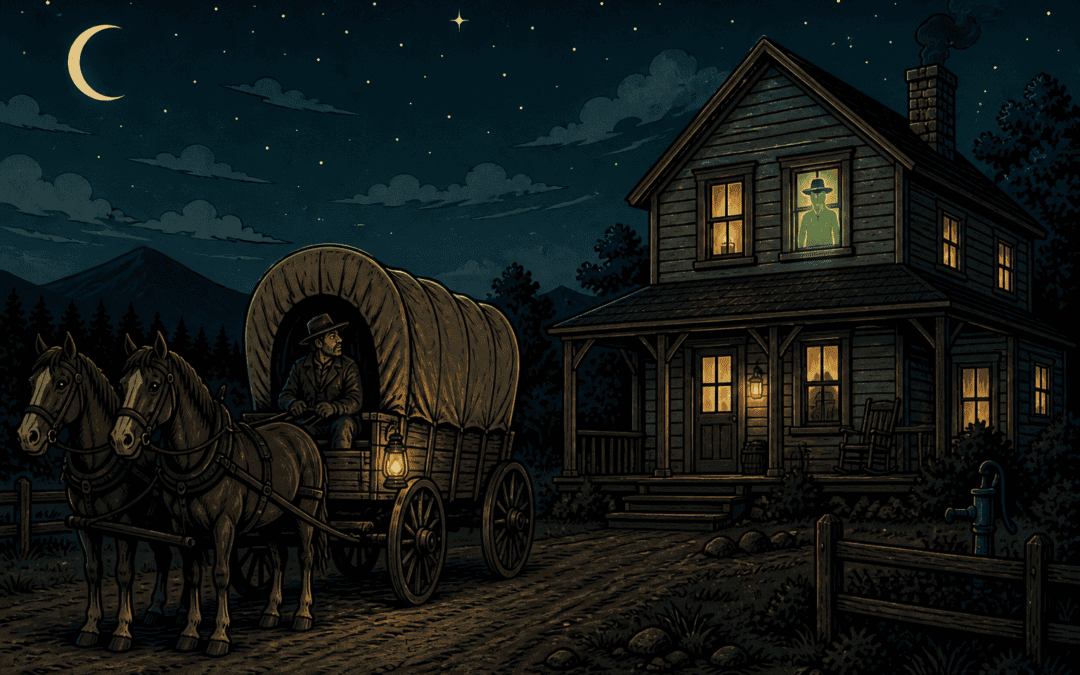
This is the detail that gets this case cited more than almost any comparable haunting, and I wish I could confirm it, because it’s a genuinely great story. According to tradition, Andrew Jackson — general and future President — traveled to the Bell farm specifically to investigate, and his wagon mysteriously became stuck and immovable approaching the property until the entity’s voice announced it would let the wagon proceed. One of Jackson’s companions, a self-proclaimed “witch tamer,” was then reportedly tormented and humiliated until he fled the property.
Here’s the honest, deflating context: there’s no contemporary, corroborating documentation from Jackson’s own extensive personal papers or any independent historical record placing him at the Bell farm at all — and Jackson is one of the most thoroughly documented political figures of his era, combed through by historians for entirely unrelated reasons. The most likely explanation is that this detail got attached later, because pairing a folk legend with a famous, credible name is one of the oldest tricks for giving a local story extra staying power (the same instinct that got Andrew Jackson’s name here probably isn’t so different from how Mother Leeds’ curse got attached to a struggling colonial almanac publisher in our Jersey Devil piece). It doesn’t make the rest of the case less interesting. It just means I can’t hand you Andrew Jackson as your proof, however much I’d like to.
Why This Case Gets Taken More Seriously Than Most Anyway
A few real, honest reasons this one has staying power beyond just a good story. Unlike most haunting claims — a single family’s private experience, one dramatic night — the Bell Witch involved an entire rural community over multiple years, with claimed witnesses well beyond the immediate family, including neighbors and a local schoolteacher. A sustained, multi-year, community-wide phenomenon is a genuinely different animal than an isolated incident, even allowing for communal reinforcement and shared expectation compounding over time in a tight-knit frontier town.
It also predates the later 19th-century Spiritualism movement (which took off more prominently in the 1840s-50s) by several decades, meaning it can’t be easily written off as riding a broader contemporary “talking spirit” trend — if anything, it may have helped set the stage for it. And most importantly: a specific, named death, attributed directly by an entire community at the time, is a genuinely rare and serious claim compared to the vague atmospheric hauntings that fill most of this genre.
The Skeptical Case (Given Its Fair Weight, No More Than That)
The most credible mundane theory centers on Betsy Bell herself as a likely source of much of the physical phenomena — echoing a well-documented pattern across cultures where a young person under real household stress becomes the unconscious epicenter of reported disturbances, a genuinely studied phenomenon in psychological literature. Some historians have also proposed that John Bell’s real, documented symptoms — facial swelling, difficulty eating, a stiffened jaw — are consistent with a mundane chronic illness, or arsenic exposure from period medicine or pest control, entirely unrelated to any deliberate act. A family under the visible strain of a father’s frightening decline, already living inside a community-wide supernatural narrative, gives a lot of room for real symptoms to be folded into the bigger legend, especially seventy years later when it finally got written down.
What We Actually Think
We think the honest, fun answer here is that we don’t actually know, and we’re genuinely glad we don’t. The skeptic in us finds Betsy-as-source and mundane illness a completely reasonable, well-supported explanation for most of what happened in that house. But the part of us that wants some of this to be real can’t quite let go of the fact that an entire community, across multiple years, independently and consistently attributed a man’s actual death to something none of them could otherwise explain — no viral internet post, no cash reward, no book deal waiting at the end of it, just a lot of frightened, sincere 19th-century Tennessee farmers who all told the same story. Maybe it really was grief, illness, and a scared teenage girl carrying more than anyone should have to. Or maybe Kate Batts had every right to be furious, and we’re still telling her story wrong two hundred years later. Either way — we’d genuinely love to know, and we’re not going to pretend we’re not rooting a little for the version where something was actually there.
Got a haunting, sighting, or theory of your own worth digging into? Send it our way — we’re always building out the next case file.